
Understanding ASD: What It Can Mean for Your Child’s Learning

Have you ever noticed that your child seems to manage some parts of learning with ease, while other things that seem straightforward can be surprisingly difficult?
They might have an incredible memory for things that interest them, but struggle to apply a skill when a question is presented differently. They may cope well when they know what to expect, but find changes, unclear instructions or a busy classroom much harder to manage.
Autism can affect learning in ways that aren’t always obvious.
Every autistic child is different. Some may find communication or social expectations challenging. Others may be more affected by sensory input, changes in routine or the way information is presented.
And often, what looks like difficulty with the schoolwork itself is only part of the picture.
Understanding how autism can shape a child’s experience of learning can help you recognise what they need and support them in a way that works for them.
What Is Autism Spectrum Disorder?
Autistic children might communicate differently, have strong or focused interests, prefer greater predictability or experience sensory information differently from other children.
And the word spectrum is important.
There isn’t one way to be autistic. Every autistic child has their own combination of strengths, challenges, preferences and support needs. Some children need significant support throughout their day, while others might need support only in particular situations.
What Autism Can Look Like
Every autistic child is different, but there are some patterns parents and teachers may notice.
At school, it may look like:
finding vague or open-ended instructions difficult
becoming overwhelmed in busy, noisy classrooms
struggling when routines or expectations change unexpectedly
finding group work or socially demanding activities tiring
interpreting instructions very literally
becoming deeply engaged in particular topics or areas of interest
needing more time to process a question or instruction.
At home, autism may look like:
needing familiar routines or wanting things done in a particular order
becoming distressed when plans suddenly change
needing significant downtime after school
struggling to begin homework if the expectations aren’t clear
having strong reactions when overwhelmed
becoming intensely focused on favourite interests or activities.
None of these behaviours tells you everything about a child.
The important question is often not simply what is my child doing?, but what is making this situation difficult for them?
Why Learning Can Feel So Hard

Sometimes the academic work itself isn’t the biggest challenge.
An autistic child can also be managing language, sensory input, changes in routine and all the unwritten social expectations that come with being in a classroom.
Communication and Processing
Autistic children may find vague or implied instructions harder to interpret and may need more time to process spoken information.
For example, “Write something interesting about your weekend” leaves a lot to work out. “Choose one thing you did on Saturday and write three sentences about it” gives a much clearer path forward.
Sensory Processing
Autistic children may be more sensitive to sounds, lighting, movement or other sensory input.
In a busy classroom, managing all that extra input can make it harder to concentrate and learn.
Predictability and Transitions
Knowing what comes next can make the world feel much easier to navigate.
Changes that might seem relatively small to an adult, such as having a relief teacher, moving desks, changing the order of lessons or attending an unexpected assembly, can be much harder for some autistic children.
Being given advance warning, clear information and time to adjust can make transitions much more manageable.
Social Demands
Navigating group work, social expectations and unwritten rules can require significant effort for autistic children.
Even when they’re managing well academically, the social demands of a school day can be exhausting.
What Helps?
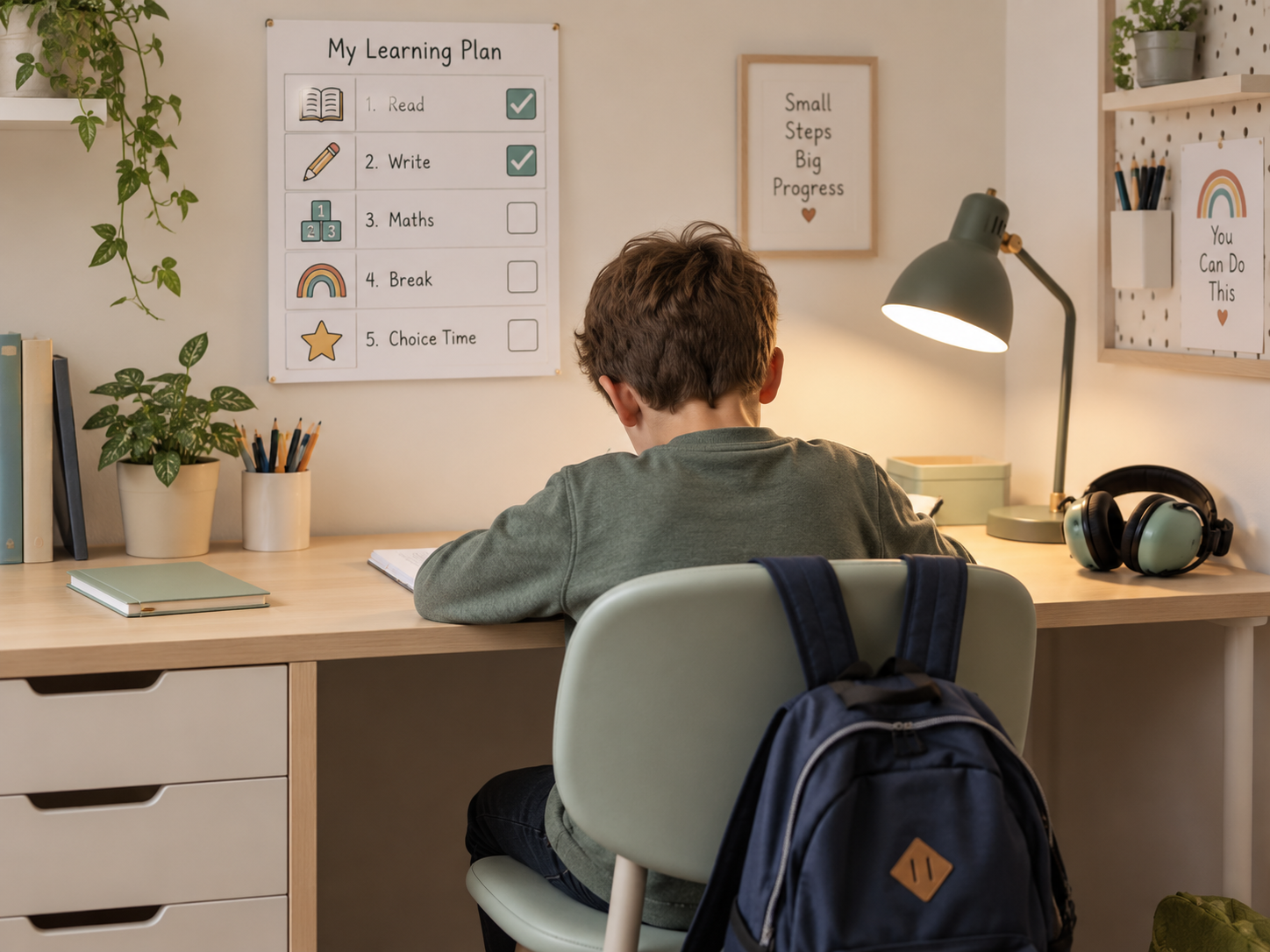
There is no single strategy that works for every autistic child.
The best support begins with understanding the individual child, their strengths and what makes learning easier or harder for them.
Make Instructions Clear and Specific
Try to remove unnecessary ambiguity.
Rather than saying, “Do your homework”, you might say, “Open your maths book to page 14 and complete questions one to five.”
Give your child time to process the instruction before repeating or rephrasing it.
Use Visual Supports
Spoken instructions disappear as soon as they’re said.
Written steps, visual schedules, checklists and examples give children something they can refer back to whenever they need it.
A simple list showing what needs to happen first, next and last can make a task feel much more manageable.
Prepare for Changes
You won’t always be able to keep routines exactly the same. But when you know something will be different, telling your child what is going to happen ahead of time can help.
Be as specific as you can about what will change and what will stay the same.
Reduce Unnecessary Sensory Demands
Small changes to the learning environment can make a big difference. Reducing background noise, limiting visual distractions or allowing sensory breaks can make it easier for your child to focus and learn.
Build From Strengths and Interests
A strong interest can be an incredible learning tool.
If your child is fascinated by trains, animals, Minecraft, space or ancient Egypt, those interests can sometimes provide a way into reading, writing, maths and other areas of learning.
The goal isn’t to take away what your child loves. It’s to use what already engages them to help learning connect.
What If You Suspect Autism But Don’t Have a Diagnosis?
If you suspect autism may be contributing to some of the challenges your child is experiencing, a good first step is to speak with their teacher and your GP about what you're noticing.
You don't need to wait for a formal diagnosis before putting supportive strategies in place. Many of the strategies that help autistic children can benefit a wide range of learners.
How the Right Support Can Make a Difference
Autistic children benefit from learning environments that are predictable, supportive and tailored to their individual needs.
Autism may influence how your child learns, but it doesn't determine what they can achieve. With the right support, autistic children can build their skills and confidence and thrive both at school and beyond.
At Attain Education, all of our tutors are qualified primary teachers and work one-to-one with each child. That gives us the flexibility to adapt learning to the individual child, including their pace, interests, strengths and support needs. Book your free consultation call today and let’s talk about how personalised tutoring could support your child’s learning needs.